
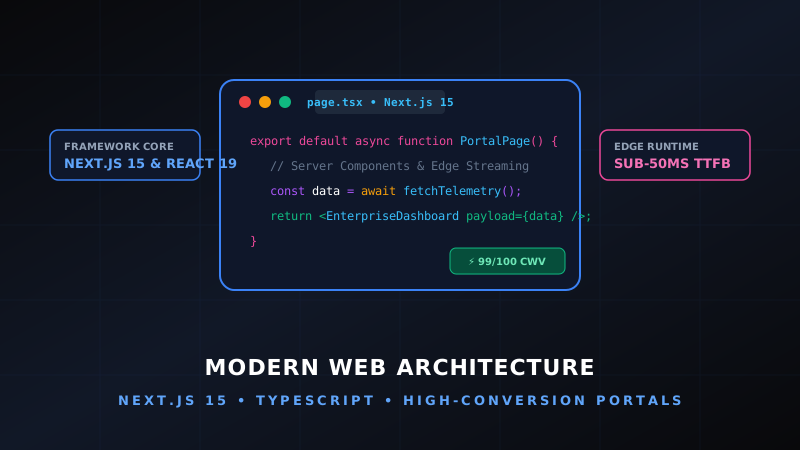
Choosing the right rendering pattern is critical for balancing load performance, SEO crawlability, and server resources. Next.js offers a hybrid model that allows you to choose rendering strategies on a per-route basis.
This guide analyzes Next.js Server-Side Rendering (SSR), Incremental Static Regeneration (ISR), and Static Site Generation (SSG) to help you choose the best fit for your production applications.
1. Static Site Generation (SSG)
With Static Site Generation, pages are generated once at build time. The resulting static HTML and JSON assets are uploaded to a CDN and delivered instantly to visitors.
- Ideal for: Marketing pages, documentation, blog posts, and generic homepage layouts.
- Benefits: Sub-millisecond TTFB, zero server database lookups on request, and perfect Core Web Vitals.
- Limitations: Not suitable for pages displaying real-time or personalized user data.
2. Server-Side Rendering (SSR)
Server-Side Rendering generates the HTML dynamically on the server for every single incoming request.
- Ideal for: User dashboards, search results, checkout screens, and dynamic user feeds.
- Benefits: Real-time data consistency, native support for session state (cookies), and seamless user personalization.
- Limitations: Slower Time to First Token (TTFB) compared to static CDNs, and higher database/server resource utilization.
3. Incremental Static Regeneration (ISR)
ISR allows you to update static pages in the background without rebuilding your entire website. You specify a revalidation interval, and Next.js regenerates the page when a request comes in after that interval has passed.
- Ideal for: E-commerce product details, directories, and corporate announcement sections.
- Benefits: Static page performance with dynamic updates, and massive reduction in backend database load.
// Example of ISR page configuration in App Router
export const revalidate = 3600; // Revalidate page every hour

export default async function Page() {
  const data = await fetch('https://api.example.com/products');
  return <ProductGrid products={data} />;
}
Decision Matrix
Use SSG by default, adopt ISR for dynamic content that can tolerate short caches, and reserve SSR strictly for pages requiring session-level personalization.